Exact2Pass

Last Update 1 hour ago Total Questions : 64
The Module 0 - Entry Exam content is now fully updated, with all current exam questions added 1 hour ago. Deciding to include IFoA_CAA_M0 practice exam questions in your study plan goes far beyond basic test preparation.
You'll find that our IFoA_CAA_M0 exam questions frequently feature detailed scenarios and practical problem-solving exercises that directly mirror industry challenges. Engaging with these IFoA_CAA_M0 sample sets allows you to effectively manage your time and pace yourself, giving you the ability to finish any Module 0 - Entry Exam practice test comfortably within the allotted time.
Let A = 
Let B = 
Calculate 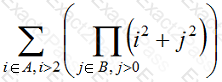
Determine which of the following statements are not true.
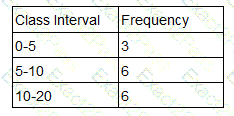
I. In a histogram the height of each rectangle equals the frequency of the interval
II. A box-plot chart is constructed to show the following values: Mean, Median, Upper Quartile, Minimum and Maximum
III. The set of data 2,2,5,7,8,8,9,10,11,12,14,16, 20 can be represented by the following frequency table:
A weekly pet insurance premium is given by a solution of the following equation:
4x2 - 11x - 3 = 0
Calculate the premium.
Identify which of the following best describes the nature of a stationary point.
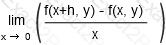
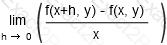
Define the partial derivative of f(x, y) with respect to x.
A)
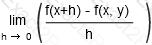
B)
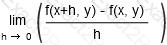
C)
D)
Consider the function:
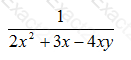
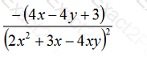
Calculate the partial derivative  .
.
A)
B)
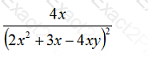
C)
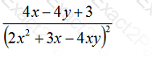
D)
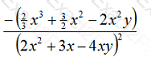
Three light bulbs are chosen at random from 15 bulbs of which 5 are known to be defective.
Calculate the probability that exactly one of the three is defective.
A)

B)

C)

D)

Consider the vector U = (3, -1, 5).
Calculate the magnitude of vector U to two decimal places.
Identify which of the following statements are true.
I. Skewness measures how peaked a set of data is.
II. Skewness is a measure of asymmetry of the distribution of the data about its mean.
III. For a symmetrically distributed data, the mean equals the median but not necessarily the mode.
IV. The value of a measure of skewness can be positive, zero or negative.
State what the limit of a function with input variable x represents.

